Full Mouth Reconstruction: The Comprehensive Guide to Complete Oral Rebuilding

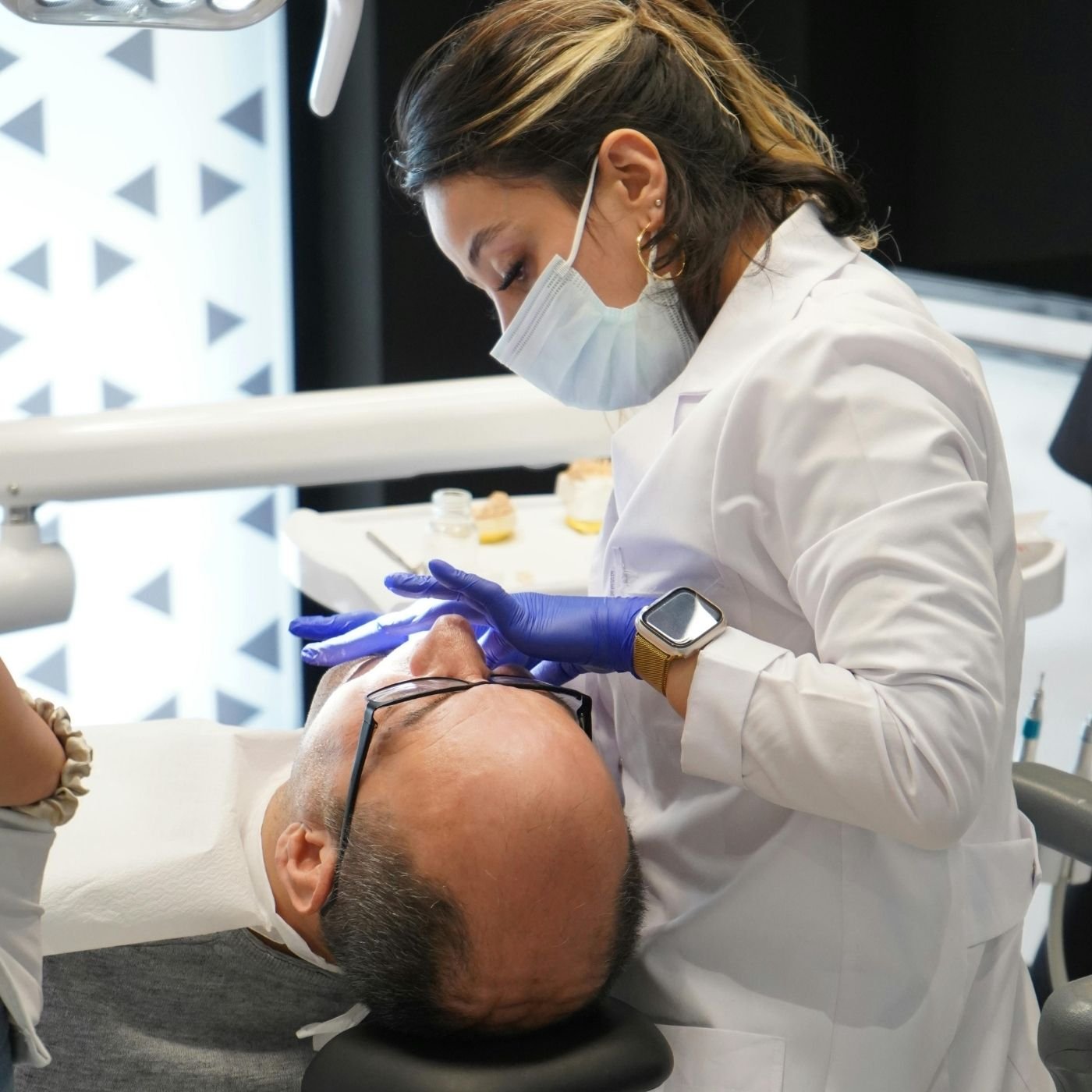
Full Mouth Reconstruction: The Comprehensive Guide to Complete Oral Rebuilding
By HealthGuideAZ Medical Editorial Team
Medically Reviewed by Board-Certified Prosthodontists and Oral Surgeons
When dental decay, severe acid erosion, severe nighttime grinding, or physical trauma compromise nearly every tooth in the oral cavity, standard single-tooth dentistry is no longer effective. Patching one tooth at a time in a broken dentition often leads to a compounding failure of the entire bite plane. To resolve these extensive cases, advanced dentistry utilizes a multidisciplinary, systematic protocol known as Full Mouth Reconstruction.
According to clinical parameters established by the American College of Prosthodontists (ACP), a full mouth reconstruction completely rebuilds the relationship between the jaw joints, the masticatory muscles, and the chewing surfaces of the teeth. This highly complex treatment blends the principles of gnatology and biomimetic engineering, often requiring a coordinated sequence of porcelain crowns, implant restorations, veneers, and precise bite occlusion realignments.
Whether your teeth have become severely shortened and flattened from decades of bruxism, your bite has entirely collapsed causing chronic temporomandibular joint (TMJ) pain, or advanced enamel erosion has left your dentition structurally vulnerable, mastering the phases of complete oral rehabilitation is your definitive first step toward restoring your biological function and facial vertical symmetry.
Advanced Reconstructive Tool
Bite Occlusion & Full Mouth Candidacy Engine
Execute our interactive neuromuscular audit to analyze your bite collapse symptoms, joint popping, remaining tooth structure, and dental history to determine your candidacy for full-arch biological rebuilding.
⚠️ PROSTHODONTIC AUDIT ALGORITHM: This tool runs a clinical candidacy and joint stress projection based on neuromuscular symptoms. It holds zero diagnostic medical validity. Reconstructing full occlusion requires explicit physical jaw tracking and diagnostic models by a licensed Prosthodontist.
Loading engine...
Powered by Health Guide AZ Reconstructive Matrix
Comparative Table: Comprehensive Reconstruction vs. Piecework Patch Dentistry
| Clinical Parameter | Full Mouth Reconstruction (Systemic) | Piecework Dental Patching (Segmented) |
|---|---|---|
| Bite Dynamic & Occlusion | Rebuilds a scientifically measured, harmonious bite plane across all 28 teeth. | Forces new work to adapt to an already broken, unbalanced bite plane. |
| TMJ & Muscular Relief | Excellent. Decompresses the jaw joint by restoring lost vertical height. | Poor. Does not fix muscle tension; new single crowns frequently fracture. |
| Facial Aging Impact | Restores lower facial height, naturally filling out wrinkles and sagging lips. | None. The lower face continues to shorten as teeth wear down further. |
| Biomaterial Longevity | Ultra-High. Cohesive use of milled Zirconia eliminates uneven wear. | Low. Mismatched materials (metals, resins, ceramics) accelerate wear. |
10 Crucial Truths About Full Mouth Reconstruction
1. The Concept of Vertical Dimension Collapse
As back molars wear flat or are lost entirely, the distance between your nose and your chin physically decreases. This is known as a collapsed Vertical Dimension of Occlusion (VDO). Rebuilding a mouth is not just about making teeth white; it is an architectural project to open the bite back up to its proper biological height.
2. Eradication of Biological Disease Comes First
You cannot build a skyscraper on a swamp. A full mouth reconstruction never begins with cosmetic porcelain. Phase one is always biological stabilization: extracting hopeless roots, clearing active periodontal infections with deep cleanings, and performing mandatory root canals to eliminate all bacterial disease from the jawbone foundation.
3. The Diagnostic Wax-Up Blueprint
Before any tooth is touched by a drill, a prosthodontist creates a physical or 3D digital blueprint called a Diagnostic Wax-up. The specialist models the ideal size, shape, and occlusion of all 28 teeth on a computer to test the mechanical path of your jaw movement before manufacturing the final teeth.
4. Temporaries Act as a Biological Test Drive
Once the teeth are prepped, the patient is placed into high-density acrylic provisional (temporary) restorations for 4 to 12 weeks. This phase is crucial. It allows your jaw muscles and temporomandibular joints to adapt to the new bite height, ensuring your phonetics (speech) and chewing function are completely comfortable before the final porcelain is baked.
5. Material Synergy Alters Wear Characteristics
A major goal of full mouth rehabilitation is matching the abrasiveness of the materials. Mixing older gold crowns with composite resins and natural enamel creates chaotic wear patterns. Modern full mouth restorations combine monolithic Zirconia on the back molars for pure mechanical power, and Lithium Disilicate (E.max) on front teeth for pristine lifelike aesthetics.
6. It Offers a Natural Facelift Effect
When a bite collapses, the lips thin out, the corners of the mouth turn downward, and the chin moves closer to the nose, prematurely aging the face. By restoring the vertical height of the teeth, the facial soft tissues are naturally supported outward, smoothing wrinkles around the mouth and restoring youthful structural volume without plastic surgery.
7. Neuromuscular Jaw Deprogramming
When your bite is misaligned, your jaw muscles constantly strain to find a comfortable resting spot, leading to muscle spasms and chronic headaches. Prosthodontists utilize hard plastic deprogrammers (like a Lucia Jig or Leaf Gauge) to relax the chewing muscles completely, allowing the jaw joint to find its true centric relation anatomy before rebuilding the teeth.
8. It Frequently Eliminates Chronic TMJ Pain
Many cases of severe jaw popping, clicking, and clicking are caused by an uneven bite forcing the cartilage disc inside the TMJ capsule to compress unnaturally. A balanced reconstruction aligns the teeth perfectly with the center of the jaw joint axis, instantly unloading the disc and relieving chronic neural pain.
9. Hard Night Guards Are Strictly Mandatory Post-Op
If you required a reconstruction because you ground your natural teeth flat, your brain will still attempt to grind your new porcelain restorations at night. While Zirconia is nearly indestructible, clenching with hundreds of pounds of force will traumatize the underlying bone. Wearing a custom-milled hard night guard is a lifelong safety requirement.
10. A Phased Treatment Plan Spans Months
True full mouth rehabilitation cannot be rushed into a single weekend. From the initial 3D diagnostics and surgical tooth stabilization to the provisional test drive and final ceramic bonding, the entire comprehensive pipeline typically spans 3 to 9 months depending on whether bone grafts or implant osseointegration timelines are involved.
Real Success Cases: Engineering the Complex Rebuild
Case 1: The Severely Collapsed Bruxist Frame
The Scenario: A 54-year-old corporate executive presented with a severely collapsed bite. Decades of heavy stress-induced grinding had worn his front teeth down to short, yellow nubs, exposing the sensitive inner dentin. He suffered from daily morning tension migraines and his lips appeared thin and deeply collapsed inward.
The Solution: A comprehensive Full Mouth Reconstruction. The prosthodontist utilized a leaf gauge to relax his masseter muscles, determined he had lost 4 millimeters of vertical height, and placed him into diagnostic acrylic temporaries for two months. Once his speech and TMJ pain stabilized, they delivered 28 units of monolithic Zirconia and E.max crowns.
The Result: His tension migraines vanished completely within three weeks of opening his bite. His lower facial height was restored, rejuvenating his lip volume and jawline profile, while providing an indestructible, bright, and functionally harmonious dentition protected by a custom nightly orthotic splint.
Case 2: Catastrophic Bulimia Acid Erosion
The Scenario: A 38-year-old female had successfully overcome a long battle with severe acid reflux and bulimia. However, the chronic gastric acid exposure had entirely dissolved the protective white enamel from the lingual backs and biting surfaces of her teeth, leaving thin, glass-like shells that were rapidly chipping and breaking.
The Solution: A fully biomimetic Full Mouth Rehabilitation. The oral surgeon performed a few preventative root canals on highly compromised segments, followed by the prosthodontist bonding custom porcelain onlays and full-coverage E.max ceramic restorations to seal and wrap every single exposed tooth root boundary.
The Result: The biological destruction was stopped entirely. The chemical glass bonding completely encased the fragile, exposed dentin cores, eliminating extreme hot/cold nerve sensitivity and restoring a beautiful, uniform, and structurally dense smile envelope.
Curiosity & Golden Tip
Did You Know? (The Centric Relation Axis)
Rebuilding a mouth is an exercise in complex physics and skeletal joint positioning.
The Phenomenon: When a prosthodontist maps out your new mouth, they do not look at how your teeth touch right now, because your current bite is broken. Instead, they guide your jaw into Centric Relation (CR)—the anatomical position where the condyle bones of your jaw sit in their most relaxed, superior-anterior position inside the skull socket completely independent of tooth contact. A successful reconstruction ensures your teeth mesh perfectly at the exact millisecond your jaw reaches this optimal joint position.
Golden Tip: Request a “Phonetic Wax Check”
Want to guarantee you don’t talk with a permanent lisp after an oral overhaul?
The Rule: When testing your temporary restorations, ask your dentist to run a strict phonetic audit. Read aloud sentences with heavy “S”, “Ch”, and “V” sounds (such as “Sixty-six silver dollars”). If your new front teeth are even one millimeter too long or thick, your tongue will strike them awkwardly, creating an immediate lisp. The dentist can easily shave the temporary wax or acrylic down in seconds to calibrate your speech perfectly before freezing the design in porcelain.
10 Frequently Asked Questions (FAQ) – Full Mouth Reconstruction
1. Is a full mouth reconstruction agonizingly painful?
2. How much does a comprehensive full mouth reconstruction cost?
3. Will dental insurance cover a complete mouth rebuild?
4. What is the difference between a Smile Makeover and a Full Mouth Reconstruction?
5. Will I have to walk around with shaved-down peg teeth during the process?
6. How long do the final porcelain restorations last?
7. Can a full mouth reconstruction fail?
8. Can patients with severe osteoporosis undergo full oral rehabilitation?
9. How do I clean my mouth after a full reconstruction?
10. Do I need to see a general dentist or a specialist for this?
Safety: The Structural Paradigm of Specialization
A full mouth reconstruction alters your entire biological bite geometry. If the alignment is miscalculated by even half a millimeter, the forces of chewing will trigger permanent jaw joint damage, chronic neural muscle tension, and rapid porcelain fractures. Never seek out cheap, single-visit discount packages overseas for a full mouth overhaul. Ensure your reconstruction is executed by a Board-Certified Prosthodontist coordinating with an Oral Surgeon, ensuring full 3D jaw joint mapping is utilized throughout the treatment.
Legal & Safety Disclaimer: HealthGuideAZ.com provides strictly educational content that does not replace direct clinical consultation. Altering full dental occlusion carries surgical risks. If you undergo full arch preparation and develop severe, throbbing pain that limits your ability to swallow, accompanied by a fever or significant swelling shifting toward your airway, proceed immediately to an emergency hospital facility.
Search Keywords for Your Research
full mouth reconstruction cost, complete oral rehabilitation, full mouth restoration veneers crowns, vertical dimension of occlusion VDO, collapsed bite correction, smile design prosthodontics, full mouth reconstruction dental implants, smile makeover full arch, neuromuscular dentistry jaw pain, diagnostic wax up dental, full mouth crown and bridge, gnasthology bite realignment, restoring worn down teeth, dental acid erosion restoration, full mouth reconstruction timeline, advanced prosthodontics specialist, full mouth ceramic reconstruction, temporomandibular joint bite adjustment, lucia jig jaw deprogrammer, fixed full mouth bridge cost, smile rejuvenation facial height, full mouth rehab before and after, full mouth restoration insurance coverage, bruxism full mouth rehabilitation, full mouth reconstruction recovery time
3D CBCT Scanning & Digital Impressions: The Future of Precision Dentistry
Clear Aligner Therapy: The Comprehensive Guide to Invisible Orthodontics
Zirconia and E.max Dental Crowns: The Ultimate Guide to Restorative Strength and Aesthetics
All-on-4 & All-on-6 Full Arch Rehabilitation: The Definitive Guide
Dental Care & Oral Rehabilitation: The Comprehensive Guide to Smile Restoration
Top 200 Cities Worldwide for Healthcare & Medical Tourism
⚠️ LIABILITY WAIVER AND CLINICAL WARNING: This tool is strictly an algorithmic and educational simulation. It holds no diagnostic validity. Dental surgery involves placing titanium structures in the jawbone and altering permanent tooth structure. We disclaim any civil, medical, financial, or billing liabilities tied to its use. An online simulation cannot evaluate true bone density (via CBCT scan), active periodontal disease, or nerve mapping. Strictly consult a Board-Certified Dentist or Prosthodontist for a comprehensive physical evaluation.
1. What is your primary dental concern right now?
10 Best Orthognathic Surgery Specialists in Switzerland